Fly Fishing For Spring Stripers - timing the migration and what flies to have ready
The Team @ J. Stockard
There are two kinds of spring fly anglers on the East Coast. The first kind watches the calendar, picks a date, and shows up hoping the fish have also been watching the calendar. The second kind watches the water temperature, tracks the bait, pays attention to what's happening in the systems south of them, and shows up with a fly box that matches the conditions they're actually going to find.
The striper migration is one of the most predictable major seasonal events in fly fishing — which is different from saying it's simple. The fish move on a timeline that is consistent enough to plan around, but the specific conditions at any given point on that timeline — water clarity, bait species, tide stage, time of day — determine which flies work and which ones don't. Getting the timing right is the starting point. Having the right fly in the box when the conditions show up is the rest of it.
The migration timeline
Post-winter stripers begin moving north from their staging grounds off Virginia and North Carolina as water temperatures along the coast push above roughly 48°F, typically in late February and March. This isn't a single wave — it's a staged progression up the coast that takes most of spring to complete.
The Chesapeake Bay, Delaware River, and Hudson River are the three principal spawning systems, producing the large majority of the migratory East Coast striper population. Fish concentrate in and around these systems in March and April, staging at river mouths and in the lower reaches of tidal tributaries. This is the first major fly fishing window — fish are schooled, relatively aggressive, and in predictable locations. Tidal rips, structure adjacent to deep water, and the edges of drop-offs near spawning areas are all worth time.
New Jersey anglers start seeing fish in numbers through April. New York and southern New England — Long Island Sound, Narragansett Bay, Cape Cod — come into their own through May. Maine and the upper New England coast typically holds the best fishing from late May through June as the migration completes.
What the fish are eating — and why it matters for fly selection
Spring striper fly selection is primarily a bait-matching exercise, and the bait picture changes as the season progresses.
Early spring — river mouths and staging areas: In cold, often turbid water near spawning systems, the primary forage is juvenile herring — both river herring (alewives and blueback herring) and Atlantic menhaden (bunker). These fish are running the same rivers the stripers are staging around, and a striper in early spring near a tributary mouth is almost certainly looking at herring. Silhouette and profile matter more than exact color in off-color water — a white-belly, dark-back Deceiver or Clouser in the 4–6 inch range covers this well. Chartreuse and white is effective when water is turbid and you want visibility.
The Ultimate Guide to Tying Bluefish Flies
Read more
Clouser's Half and Half Variant
Read more
Mid-spring — bay and estuary fishing: As water warms and clears, sand eels (American sand lance) become the dominant forage in most Northeast bay and estuary systems. Sand eel imitations are slim, sparse, and long — the antithesis of a big bunker fly. This is where a 3–4 inch, narrow-profile pattern on a 1/0 or 2/0 hook outperforms a bulkier pattern that looked perfect three weeks earlier. Olive over white, tan over white, and straight white are all productive. The retrieve matters as much as the fly — a slow, irregular strip with pauses that let the fly drop mimics the movement of a sand eel losing ground in current.
Late spring — open coastal water: As fish push into open water along beaches, rocky points, and offshore structure, bunker (menhaden) become increasingly important. This is big-fly territory — 6–8 inch patterns on 3/0–4/0 hooks, tied with significant bulk to push water and create a silhouette. Bunker are thick-bodied fish with a white belly and dark olive-to-grey back, and the most effective imitations match that profile. Poppers and large surface patterns also start to produce in this window as fish chase bunker schools to the surface in low light.
The core fly list
Lefty's Deceiver — the foundational pattern
Bob Clouser gets the name recognition, and the Clouser Minnow remains essential for getting a fly down in current. But Lefty Kreh's Deceiver is the pattern that actually built striper fly fishing on the East Coast and it remains the most adaptable design in the box. Long saddle hackle tails — four to six matched feathers — paired with a bucktail collar, flash, and a finished head create a fly that scales from schoolie-size up to trophy presentations and holds its profile throughout the retrieve.
For spring fishing, tie Deceivers in the 4–6 inch range across white, chartreuse/white, and olive/white. Keep the construction honest — finish thread wraps with UV resin, not just head cement. Saltwater fly fishing puts thread wraps under conditions freshwater tying simply doesn't, and a Deceiver that deaminates after three fish is a problem when the migration is running and you'd rather be casting than re-rigging.
Clouser Minnow — depth and current
When fish are staged deep, holding in current near structure, or visible on depth finders below the feeding zone, a Clouser with appropriately weighted dumbbell eyes is the efficient answer. The weight drives the fly down, the jig action on the pause triggers strikes, and the sparse bucktail profile suggests a baitfish in distress. Chartreuse and white is the default for a reason. White over white, and olive over white are the spring variations worth having tied. Keep a range of eye weights — lighter for shallower presentations over sand, heavier for fast water and depth work.
Sand eel patterns
The most underrepresented fly in most spring striper boxes, and arguably the most important one from April through early June across most of the northeast. Tie sand eel imitations long, sparse, and without significant bulk — craft fur, bucktail, or a small amount of polar bear substitute over a straight shank hook. The profile should be narrow enough that the fly collapses when wet. Size 1 to 2/0 hooks, 3–4 inch finished length. All white, olive over white, and tan over white. Don't add eyes if the fly starts to look heavy — a sand eel pattern that looks a little too refined is usually closer to right than one that looks substantial.
Poppers and surface patterns
Underused by fly anglers who arrive with only subsurface patterns and watch spin fishermen catch fish on top. When bunker schools are being pushed to the surface in low light — early morning, last hour of light, overcast days with a chop — a popper or slider fished through the edges of the blitz is extremely productive. Keep at least a half-dozen in the box from April onward in white and chartreuse, and have the right leader for them: a shorter, heavier butt section turns over a popper better than a standard 9-foot leader.
Deceiver variants — bunker profile
For the late-spring open-water window when fish are on large bunker: tie big, tie wide, and tie with something that pushes water. Deer hair heads, wide bucktail collars, and a profile that doesn't collapse when wet are the goals. Flash is less important than bulk in this application. These are not elegant flies and they're not meant to be — they're meant to look like a 7-inch bunker that can't quite keep up, and they should fish on an 8- or 9-weight with an intermediate or sink-tip line that gets them below the surface on the retrieve.
Line systems and leader setup
Most spring striper situations are covered by two line choices. A floating line with a 9-foot leader tapering to 16–20lb fluorocarbon handles surface presentations, sand eel work in shallow water, and Deceivers fished subsurface on a slow retrieve. An intermediate or Type III sink tip handles most structured and current-heavy situations where you need the fly to track below the surface and stay there on the pause.
For heavy Clousers and bunker patterns in fast current or significant depth, a Type VI sink tip on a 7- or 8-weight gives you the combination of line speed and sink rate that gets the fly where it needs to be. Keep the leader short in this application — 4–5 feet of straight fluorocarbon from the sink tip to the fly is more efficient than a tapered leader that fights the line's intent.
Hook selection
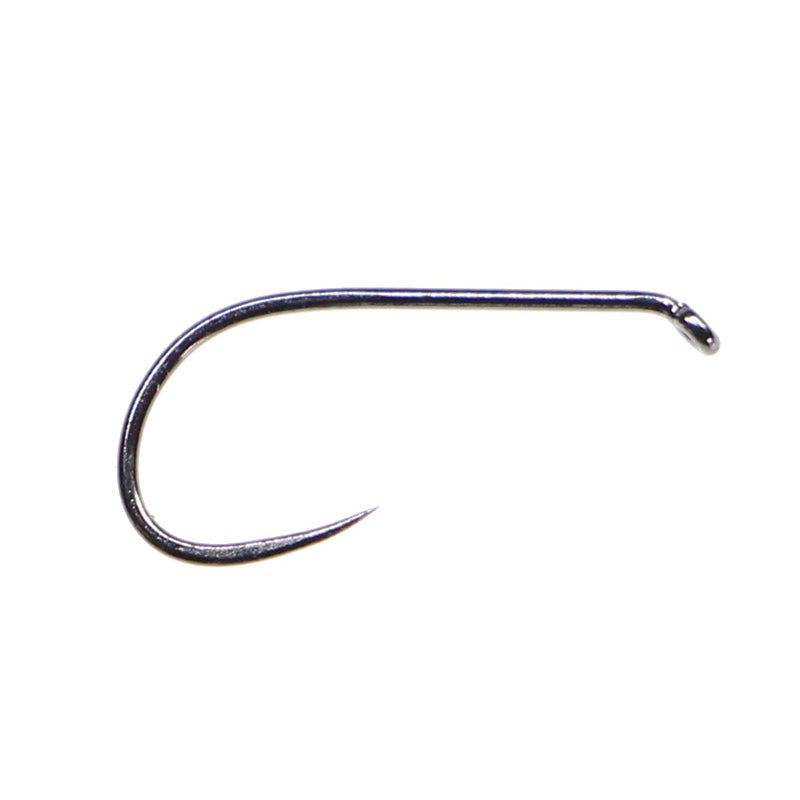
Saltwater hooks do also eventually corrode.And, fairly quickly at that if you're not rinsing flies between sessions and inspecting points before you tie on. The hooks worth building spring striper patterns on are forged, corrosion-resistant, and sharp enough out of the packet that you'd notice if they weren't. Gamakatsu SC15, Ahrex, and the Tiemco 811S are reliable options across the size range that covers most striper patterns. At 2/0 and larger, a forged hook point is not optional — a striper's mouth and the sustained pressure of a hard fight will straighten a light-wire hook.
Find out more about hook selection in our hook comparison chart:
Hook Comparison Chart 2026
In short
The migration moves north from Virginia in late February through June — track the reports one system south and add two weeks
Early spring: herring profile, 4–6 inch Deceivers and Clousers, chartreuse/white in turbid water
Mid-spring: sand eel imitations, slim and sparse, olive/white and all-white, slow irregular retrieve
Late spring: bunker profiles, big flies on 3/0–4/0 hooks, push water and cover the surface window
Two lines cover most situations: floating for shallow and surface, intermediate or Type III sink tip for structured and current-heavy water
Build flies to last — UV resin on all thread wraps, forged saltwater hooks, rinse and inspect between sessions
The full range of saddle hackle for spring striper patterns is available here.