Fly of the Month - Light Cahill
The Team @ J. Stockard
Guest Blogger: J. Stockard Pro Tyer, Scott Fisher, aka the 'Trout Jouster' on Instagram, ties this month's fly.
Named after the legendary angler Dan Cahill, who first tied this pattern in the early 1900s, the Light Cahill represents one of the most versatile and reliable mayfly imitations in any fly box. Its pale cream and light ginger coloration perfectly mimics several important mayfly species across North America, from the Eastern Light Cahill (Stenonema canadense) to various Ephemerella species that emerge during the prime fishing months of May through July.
What makes the Light Cahill truly special isn't just its ability to match specific hatches—it's the pattern's remarkable capacity to serve as a searching fly when no obvious feeding activity is present. Its neutral, appetizing appearance suggests "food" to trout without being too specific, making it an excellent choice for prospecting likely holding water or when fish are feeding selectively on multiple mayfly species.
The Light Cahill's construction—with its wood duck flank wing, cream-colored body, and light ginger hackle—creates a delicate silhouette that sits beautifully on the water while providing just enough visibility for the angler to track. It's a pattern that demands respect from both fish and fisherman, rewarding careful presentation with memorable takes from educated trout.
RECIPE
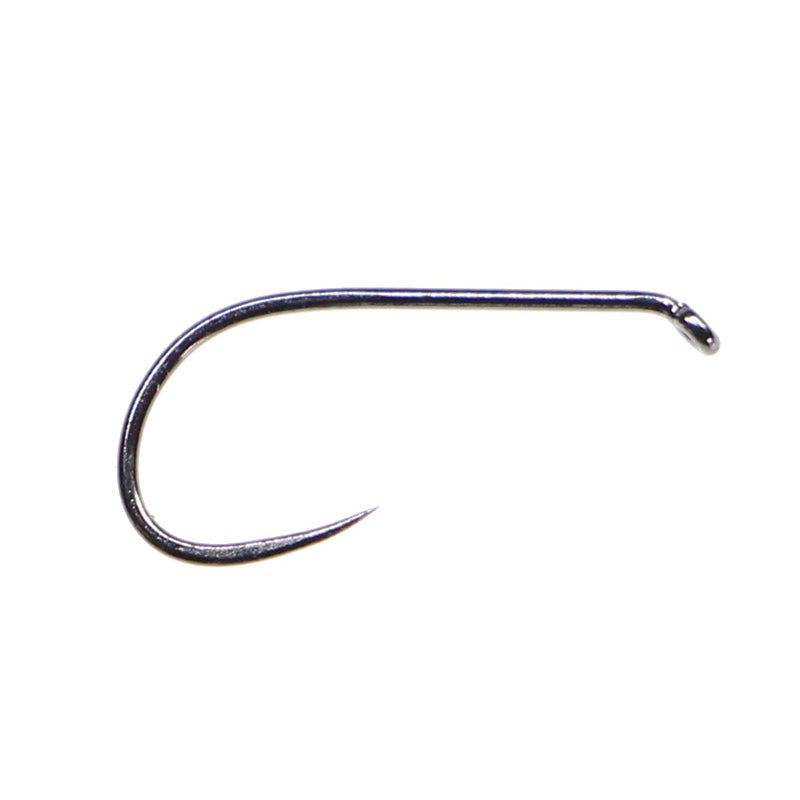
Hook: #14 Daiichi 1180Thread: 12/0 PrimroseTail: Light ginger spadeBody: Cream fox belly (or substitute for micro fine dubbing in Light Cahill from Hareline)Wing: Wood duckHackle: Light barred ginger
Start your flattened thread onto the hook one hook eye length behind the hook eye, creating a smooth thread bed. End your thread with one additional hook eye length behind where your thread began. You should have the traditional Catskill bare shank, and your thread should be in place for where your wood duck wings will be installed.
Select a wood duck feather that, when drawn together, the tips align with each other for best results. (Substitute Mallard flank or teal if wood duck is not available.) Remove soft fibers from the bottom of the feather. Cut the rachis out approximately halfway down from the top and remove the wood duck fibers, creating a V-shape with two clearly defined sides of fibers. Using your right hand, draw the fibers together in a bundle with tips facing the hook eye. Measure the wood duck to be a full hook length minus the eye. Bring that measurement forward and take two pinch wraps over the bundle, mounting the wood duck fibers onto the shank. Check to ensure you have them secured where your thread originally was resting, and if satisfied, proceed by taking 6-8 more flattened thread wraps down the shank to lock in your material.
Clip excess wood duck at a 45° angle to the shank, creating a smooth taper of thread leading down the shank. End with your flattened thread behind the bundle of fibers.
Grab the bundle of wood duck fibers with your left hand and lift them vertical. Proceed to move your thread in front of the bundle and create a thread dam by taking wraps very close to the underside of the fibers, walk the thread forward and then come back in once more with a few more wraps under the fibers, propping up the bundle to almost vertical. Feel free to pull the fibers back and continue to coax them into an almost vertical position.
*TROUBLESHOOTING* The underside of the shank should still be smooth with no lumps or bumps where the thread dam was created. If there is, redo and make sure your thread was completely flat during the thread dam process, and possibly take fewer wraps. This is critical for your hackle wraps to wrap around the shank smoothly, as it will react to everything underneath it.
Fan the fibers out and start to find the divide between the fibers to create your near-side and far-side wings. If done well, the fibers should almost tell you where they want to go. Ensure you have equal amounts of fiber on both sides. With flattened thread, take two sets of figure eight wraps between your two sides of fibers, further dividing them into two distinct wings. Optional: To further your wings into two defined shapes, take two soft wraps encircling the base of the far-side wing, a wrap around the shank behind the wings to save your work, and finally, another two soft wraps around the base of the nearside wing. End with your thread behind the wings. Use your thumbnail and fingers to prop your wings up vertically or adjust the angle of the wings to your liking.
With flattened thread, take touching wraps down the hook shank and stop right before the hook bend. Take 8-10 fibers of your tailing material, making sure the tips are aligned and measure a full hook length minus the eye, just as you did the wings. Take two soft wraps to get your tailing fibers mounted onto the shank. If satisfied, lock in your tail with thread wraps moving up the shank. Cut excess material at the taper you created earlier, making a smooth carrot shaped thread body, and end with your thread back down at the base of the tail. *TIP: If your tail is slanting downward at this point then you went too far into the hook bend. Undo, and back off a wrap or two and try again. Your tail should extend horizontal to the shank.
Take a very small amount of dubbing from your source, and then remove a few wisps of fibers. *The quantity should be barely visible to you on your fingers. This is how little you use. Dub the material onto the thread in roughly a 3” length, enough to “color” the thread. Creating a tapered dubbing noodle is not necessary, as the taper you created with the thread underbody has already taken care of this. Wrap up the body and stop, leaving a hook eye amount of space behind the wings to allow for your first set of hackle wraps. *TIP This is critical to create a sparse, dainty body with a slight taper, as too often fly tyers overdo this, creating a sponge. The body is not responsible for floatation, and sparseness ensures your fly remains light, and not absorb more water than what already occurs.
Select a rooster hackle feather from either a cape or saddle and measure on your hackle gauge so the tips match exactly a size 14. As the Daiichi hook is the closest to the original hook shape and length these patterns were built upon, the hackle measurement is true to size. Cut the rachis at the “sweet spot” where the webbing disappears and uniform barb length is seen. Then strip a quarter inch of barbs off both sides to expose bare stem. Strip approximately 6 additional fibers on the right side of your feather (if the face of the feather is facing you.) Install the rachis at a 45° angle on the near side of the shank, where your dubbing body ended. Keep thread flat, and take touching wraps forward securing your hackle, passing behind and in front of your wings and ending where your thread originally started. DO NOT move past this point, as to preserve the bare shank of the hook.
Coax the hackle feather by lightly bending it forward until the feather almost stands vertical on its own. Take your first wrap of hackle over the shank, followed by one more. At this point the barbs should be wrapping vertical and neatly. If this does not show, and you see the barbs tilting back, reverse the wraps are do it again until they splay neatly. This is another critical step to ensure a neat, uniform hackle collar, as the first two wraps will tell you how future wraps will lay down. Like a domino effect, if the first two wraps don’t look good, they will continue to get worse. If satisfied, proceed by taking close wraps, making sure not to trap barbs from the previous wraps. General rule of thumb is 3 behind the wing, and 2-3 in front. Though this does vary depending on your hackles barb density, so use best judgement.Secure your hackle stem no further than where the thread base stops. Take securing wraps slightly back toward the hackle, as taking them forward will possibly jeopardize losing your bare shank space. Finish with 3 half hitches and secure with either traditional head cement or Solarez Bone Dry. I caution against using a whip finisher because it risks the possibility of ruining your last hackle wraps, and not getting a clean finish to the head of the fly. Happy fishing!
Golden Demon Steelhead Fly - Fly of the Month
Read more
March Brown Parachute Fly - Fly of the Month
Read more