




This unweighted zonker-style streamer from Justin Bowman is a versatile baitfish and leech imitation that has proven itself on Midwest smallmouth rivers, driftless trout streams, and big western tailwaters like the Missouri River near Craig. The fly combines the flowing movement of rabbit fur with a lightly built synthetic head and collar, producing a pattern that swims naturally and maintains a lifelike profile without added weight.
Justin prefers fishing this fly with different line systems depending on the water. On larger rivers he uses a 7-weight rod paired with a Rio 15-foot Type VI sink tip to get the fly down quickly, while on smaller streams he fishes it on a floating line with various leaders to control depth.
Color options are nearly limitless, but black, purple, and orange remain his personal favorite combination. With its flowing rabbit strip tail, flashy collar, and subtle head profile, it’s a fly that will catch fish anywhere predators are looking for an easy meal.
This is the ideal fly for pre-spawn, Spring bass fishing, read more about what you need to fly fish for bass, here.
Materials
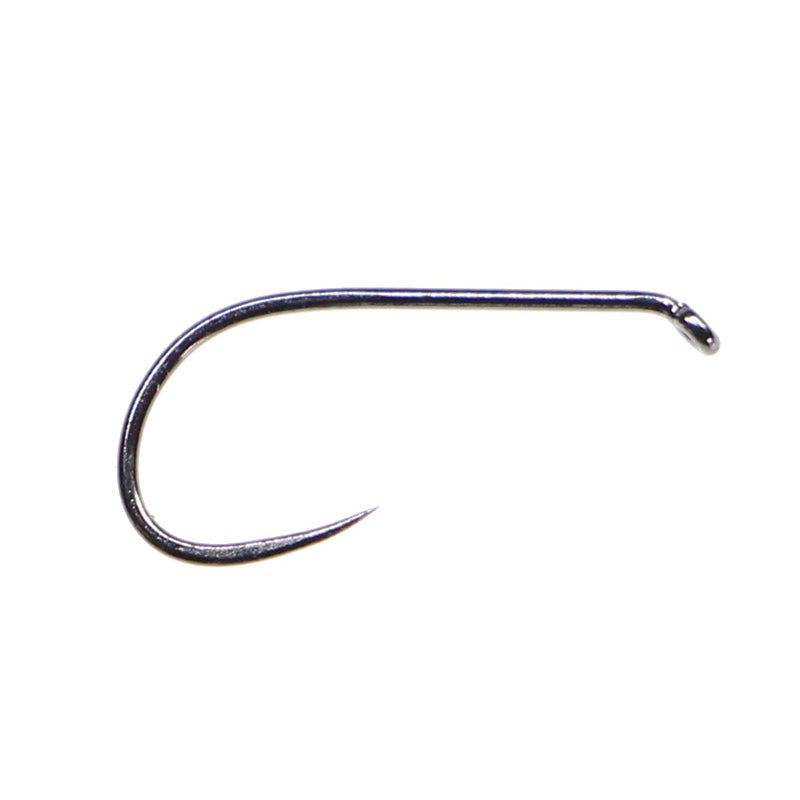
- Hook: Gamakatsu B10S, size 2
- Thread: Veevus GSP 100 denier, black (or white colored with markers)
- Zonker: 1/8" rabbit fur strip, black
- Chenille: Medium chenille, black
- Palmer Material: Medium palmer chenille, black
- Collar: EP Sparkle Brush, black/purple
- Head: Senyo’s Laser Dub, black (top) and orange (bottom)
- Eyes: Flymen Living Eyes, Ice 6 mm
- Adhesive: Loctite Gel Super Glue or Tear Mender
- Finish: Loon Thin Clear Fly Finish
FLY OF THE MONTH - Sparkle Zonker Tying Steps
Step 1

Cut a rabbit zonker strip approximately 3 inches long. Before cutting or tying, wet your fingers and separate the fibers so they part cleanly around the hide. Apply a light coating of super glue to the hook shank before starting the thread. Start the thread near the hook eye and wrap down the shank to the bend, covering the hook and wiping off excess glue if needed. Place the rabbit strip on top of the shank just behind the hook eye and estimate the tie-in point. Separate the rabbit fibers at that spot and secure the strip with two tight wraps of GSP thread. Preen fibers upward before tightening.
Step 2

Advance the thread slightly forward and add a few more securing wraps to lock the rabbit strip in place. Then, tie in the palmer chenille first, followed by the medium chenille. Wrap the medium chenille forward to form the body, stopping short of the eye. Secure and trim. Wrap the palmer chenille forward through the body to add movement and texture. Secure and trim the excess.
Step 3

Part the palmer chenille fibers on top of the hook and pull the rabbit strip forward over the body. Secure the hide with several tight thread wraps. Trim the excess rabbit hide but leave a small section so the tie-in remains secure. Apply a small drop of super glue and reinforce with additional thread wraps.
Step 4

Tie in the EP Sparkle Brush and wrap it forward three turns to form a collar, brushing fibers out as you wrap. Secure and trim. Prepare a small clump of black Senyo’s Laser Dub by stacking the fibers lightly to align them. Tie the clump in at the center so the fibers extend forward over the eye and remain on the top half of the hook. Prepare a clump of orange Laser Dub and tie it in the same way on the bottom of the shank. Whip finish behind the forward-facing Laser Dub fibers and cut the thread.
Step 5

Tease the Laser Dub fibers up and down to shape the head. Apply a small drop of super glue or Tear Mender on each side of the thread base and attach the 6 mm eyes. Comb the Laser Dub fibers rearward and apply a thin coat of UV fly finish near the hook eye to lock the head in place. Cure with a UV light.


